Post-Incident Support, Reintegration & Non-Retaliation Monitoring
Support affected individuals and reintegrate teams while monitoring for retaliation.
Course Category
Response, Investigation & Remedies
Lecturer
Hannah
Patel
Enrolled Learners
0 learners
Last Updated
23-12-2025
Level
All Levels
Available Language(s)
English
What you'll learn
- Provide compassionate post-incident support
- Plan reintegration with safety and dignity in mind
- Monitor for retaliation and ensure remedies take hold
- Evaluate the effectiveness of post-incident actions
Requirements
Completed investigation or policy course recommended.
Description
Dealing with the aftermath of an incident requires care and ongoing monitoring. This module covers trauma-informed support, reintegration strategies, and non-retaliation monitoring mechanisms to sustain safety and trust after an incident. Realistic scenarios illustrate practical steps for leadership and teams.
This module focuses on compassionate post-incident support, planning safe reintegration for individuals and teams, and monitoring for retaliation to sustain safety and trust after an incident. It also covers how to evaluate the effectiveness of the actions taken.
Participants typically include managers, supervisors, HR professionals, investigators, and team leaders involved in post-incident response, reintegration, or retaliation monitoring within their organization.
Trauma-informed support focuses on safety, validation, and respectful communication. It involves listening without judgment, assessing risk, avoiding re-traumatization, and providing appropriate resources while maintaining confidentiality.
Plan reintegration with a risk-based approach: assess readiness, adjust workloads, provide flexible scheduling, establish check-ins, and involve the individual, their manager, and wellness resources to restore confidence and performance.
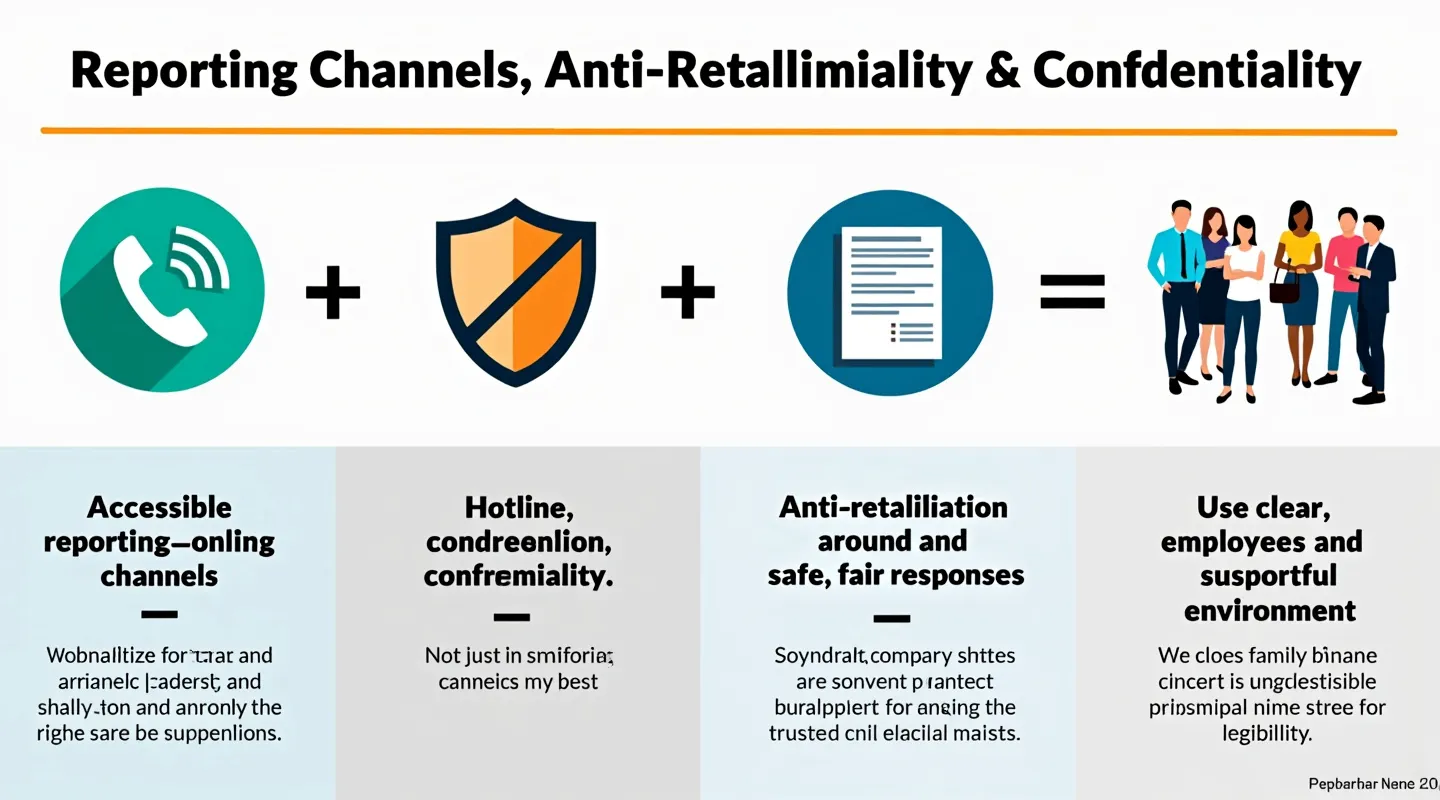
Non-retaliation monitoring includes clear reporting channels, follow-up with involved parties, data analysis to detect retaliation signals, and prompt escalation if retaliation is suspected or observed.
Confidentiality is maintained by limiting access to sensitive information, securely storing records, using anonymized data where possible, and communicating information only to those with a legitimate need to know.
Key roles include HR, leadership, managers, investigators, legal/compliance, employee wellbeing professionals, and diversity, equity & inclusion leads who coordinate support and remediation.
Effectiveness can be seen in shorter resolution times, reductions in retaliation incidents, improved wellbeing indicators, higher engagement and trust scores, stable or improved performance, and progress on action plans.
Escalate promptly to HR, compliance, or legal stakeholders when retaliation is suspected or when risk remains after initial actions, and ensure timely follow-up and corrective measures.
Documentation should include the reintegration plan, action items and owners, timelines, communications, outcomes, and any anonymized metrics used to monitor progress, all stored securely.
Reintegration should be risk-based and guided by safety and readiness assessments. There is no universal timeframe; plans should be adjusted to the needs of the individuals and teams involved.
Maintain safety and trust through ongoing listening, transparent communications about implemented changes, regular wellbeing checks, training updates, and continuous improvement of policies and practices.
Offer safe reporting channels, access to counseling or peer support, and opportunities to share concerns in a respectful environment. Ensure they are protected from retaliation and that their wellbeing is prioritized.
Share high-level outcomes and lessons learned publicly when appropriate, while protecting individuals’ privacy and avoiding disclosure of sensitive details. Use approved language and consent where possible.
Yes. Actions should connect findings to systemic changes such as policy updates, training enhancements, and process improvements to reduce the likelihood of recurrence.
This module builds on investigation findings and remediation efforts, translating them into compassionate support, reintegration strategies, and ongoing monitoring to ensure changes take hold.
Yes. Consider local laws, data privacy requirements, reporting obligations, and cultural nuances while maintaining consistent core practices across sites.
Common challenges include rushing reintegration, inconsistent messaging, inadequate follow-up, insufficient resource allocation, and missing mechanisms to detect retaliation early.
Engage senior leaders, HR, managers, and employee groups; establish feedback loops, share progress and metrics, and align reintegration efforts with broader culture and policy changes.
The module includes knowledge checks and applied tasks to assess understanding and application. These assessments contribute to overall course outcomes and ongoing competence.
Adaptations include virtual check-ins, remote access to support resources, clear online communication plans, and ensuring that reintegration and retaliation monitoring address remote colleagues as proactively as in-person teams.
Resources typically include reintegration plan templates, non-retaliation monitoring checklists, debrief and communication templates, and dashboards to track progress and outcomes.
This assessment tests understanding of post-incident support for affected employees, reintegration into the workplace, and monitoring to prevent retaliation following harassment incidents.
$89.00
This Course Include
1 hours
1 quizzes
31 lessons
Full lifetime access